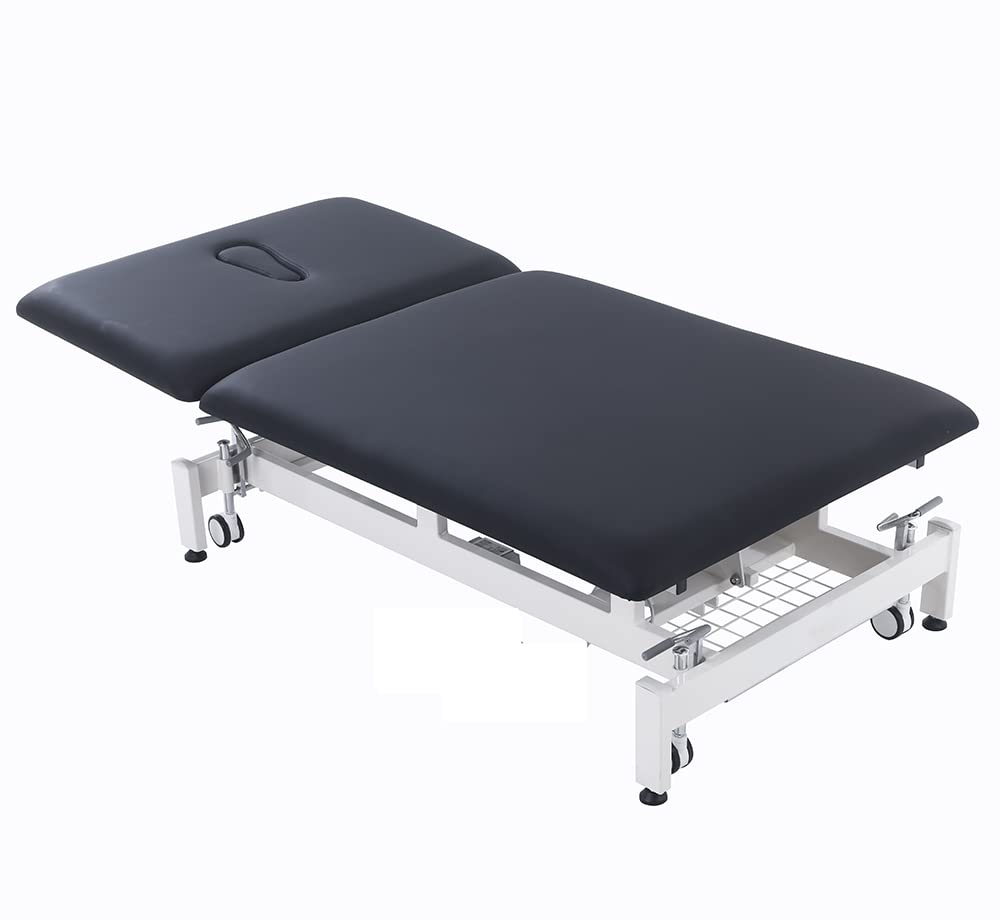
You just got a call from a new client. They mention, almost apologetically, that they weigh 380 pounds and have had a hard time finding practitioners who have the right setup. You want to say yes — bariatric massage is valuable, underserved work. But before you confirm the booking, you need to answer one question your training probably never covered: can your table actually hold them safely?
This isn’t just about the weight number on your table’s spec sheet. There are two different weight ratings that manufacturers publish — static load (the maximum weight a table can hold when nothing is moving) and working load (the maximum safe weight during active treatment, when a practitioner is applying pressure, leaning, and repositioning a client). Confusing these two figures isn’t a minor spec-nerd distinction. It’s a liability issue that can result in a collapsed table, a client injury, an insurance claim, and potentially the end of your practice. This article breaks down exactly what these numbers mean, how to read them across major brands, and what to buy — or upgrade to — before your first bariatric session.
| EDITOR'S PICK[EarthLite Ellora Electric Lift](https://www.amazon.com/dp/B0016JIEOS?tag=greenflower20-20)… | Mid-tier[Sierra Comfort Standard 4- Sect](https://www.amazon.com/dp/B00Z9VFYSS?tag=greenflower20-20)… | Budget pickCLORIS 84" Professional Massage… | |
|---|---|---|---|
| Table Type | Electric Lift | Electric Lift | Portable |
| Top Width | 32" | — | — |
| Top Length | 73" | — | 84" |
| Weight Capacity | — | — | 1100 lbs |
| Made in USA | ✓ | — | — |
| Case Included | — | — | ✓ |
| Price | $1,999.00 | $1,149.00 | $329.99 |
| See on Amazon → | See on Amazon → | See on Amazon → |
Why the Static/Working Load Gap Is Bigger Than You Think
Every massage table has a static load rating — the maximum weight it can support when that weight is simply resting on the table in a stable, motionless state. This number is almost always higher, sometimes dramatically so, than the working load limit (WLL), which accounts for the dynamic forces introduced during a massage session.
Here’s the physics in plain terms: when you lean into a client’s back with your body weight behind your forearm, you’re not just pressing with your hands. You’re creating a momentary downward force that can spike two to three times the client’s resting body weight on a localized section of the table. The legs, cable system, and frame joints absorb these micro-shocks dozens of times per session. A table rated for 600 lbs static load might only carry a 450 lb working load — and that difference matters enormously when your client weighs 375 lbs and you’re applying deep tissue techniques.
According to ABMP (Associated Bodywork and Massage Professionals), published guidance on equipment safety and practitioner liability notes that operating a table beyond its working load limit — even briefly — can constitute negligence if an incident occurs and the manufacturer’s specifications are introduced as evidence. The AMTA (American Massage Therapy Association), in its published scope-of-practice and liability resources available at amtamassage.org, similarly advises members that equipment selection is a component of professional standard of care, not merely a purchasing preference.
The gap between these two ratings is not standardized across the industry. Different manufacturers calculate and report working load using different methodologies. Some are conservative and transparent. Others bury the distinction in footnotes, or publish only the higher static number in their marketing materials. Knowing which number you’re looking at — and asking manufacturers directly when only one figure appears — is a foundational step before any bariatric booking.
Reading the Numbers: A Brand-by-Brand Breakdown
The comparison below organizes tables into three tiers based on working load capability and intended use context. Each tier reflects a meaningfully different risk-and-investment profile for practitioners considering bariatric work.
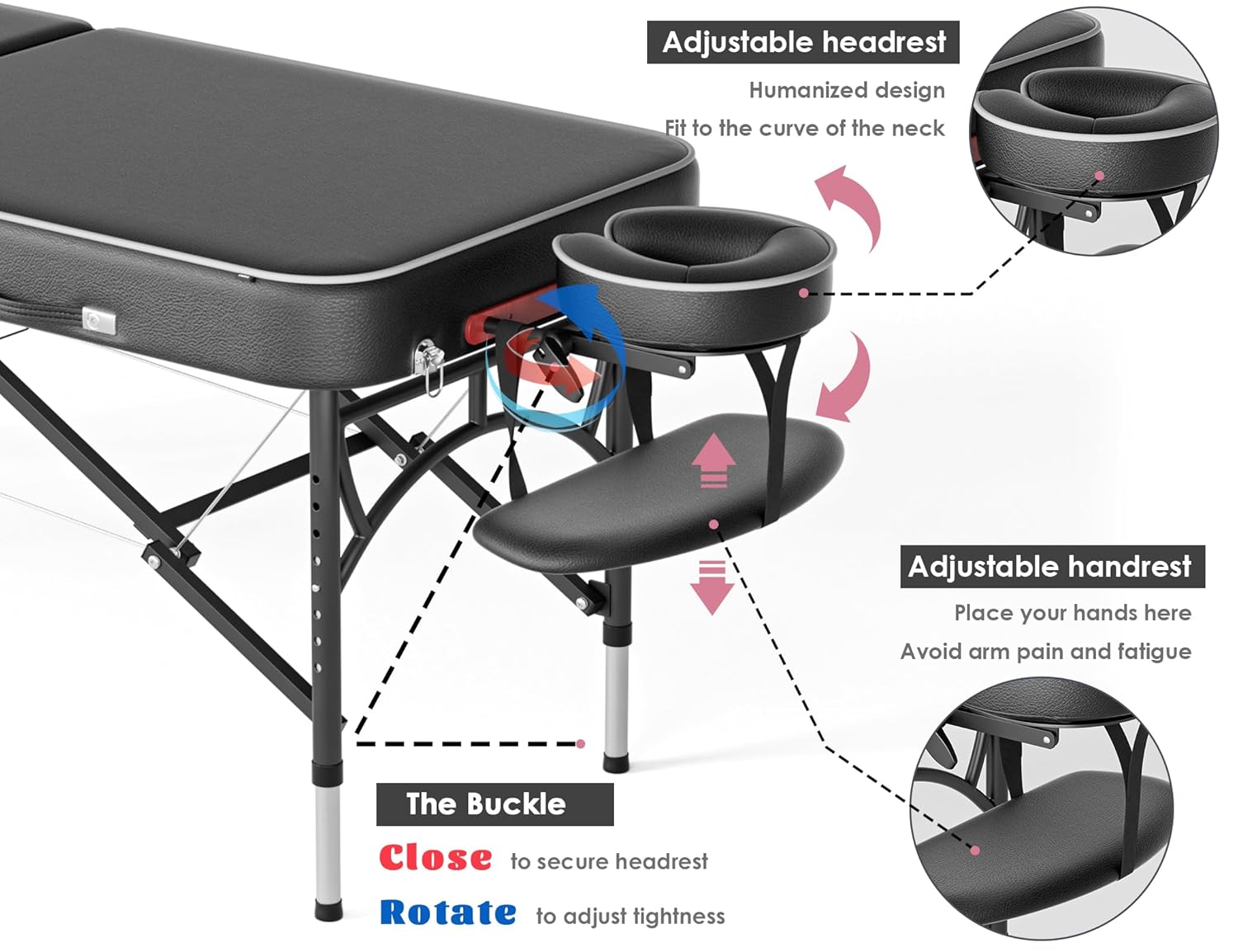
Entry-Level Portables: Adequate for Standard Clients, Contraindicated for Bariatric Work
CLORIS
$329.99
In stock on Amazon
Check price on AmazonTables in the $150–$400 range — including the Earthlite Harmony DX and comparable Sierra Comfort models — typically advertise static loads of 500–600 lbs. Their working loads, where disclosed, tend to run 400–450 lbs. For most adult clients, that margin is adequate. For bariatric work, it is not.
A client weighing 350 lbs is already pushing the working load floor of these tables before any pressure is applied. Under deep tissue or myofascial technique, the dynamic load spikes described above can push that figure well past the working load limit within the first few minutes of a session. Practitioners in this tier who receive bariatric referrals should treat their current table as contraindicated for that population and plan accordingly — either through a dedicated second table or a referral relationship.
The transparency gap is also most pronounced here. Entry-level manufacturers are the least likely to publish working load figures prominently, and marketing copy frequently leads with the static rating. If a listing says “holds up to 600 lbs” with no further qualification, assume that figure is static until proven otherwise.
CLORIS
$329.99
In stock on Amazon
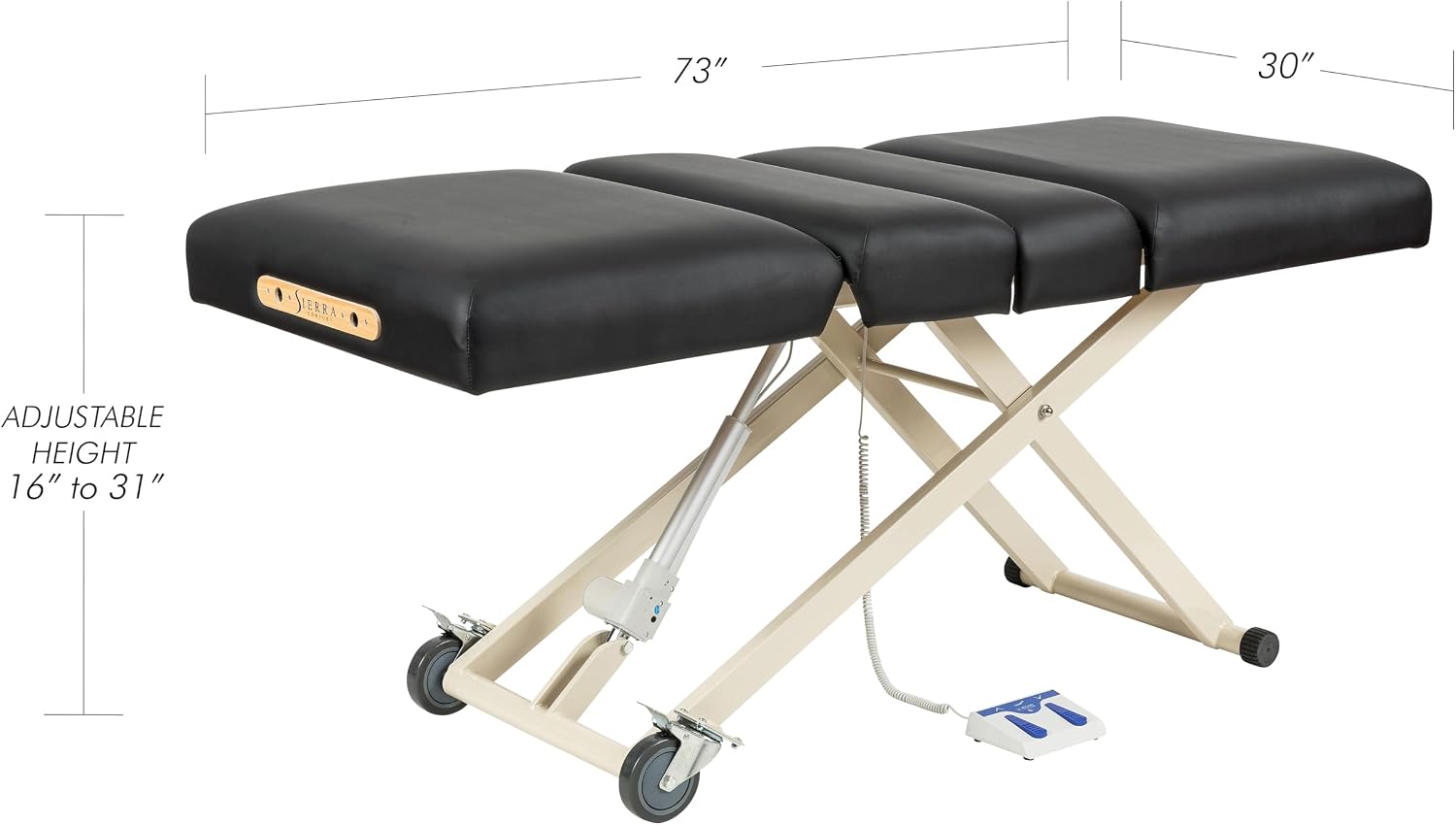
Check price on AmazonMid-Range Portables and Stationaries: The Practical Bariatric Entry Point
Sierra
$1,149.00
In stock on Amazon
Check price on AmazonThis is where working load specs start to separate meaningfully from static load in a practitioner-favorable direction. The $500–$1,200 price band includes tables from Custom Craftworks, Oakworks’ mid-range portable lines, and the Massage Warehouse Pro series — and these manufacturers are generally more transparent about publishing both figures.
The Custom Craftworks Omni stationary, for example, is rated at a 750 lb static load with a 600 lb working load, per Custom Craftworks’ published specification sheets. That ratio leaves usable safety margin for clients up to approximately 500 lbs under standard applied-pressure technique. The rating is achieved through a reinforced hardwood frame with a double-bolt leg system — a construction detail worth confirming in any mid-range stationary you’re evaluating.
For practitioners who see bariatric clients regularly but are not yet ready to invest in commercial-tier equipment, this price band represents the minimum defensible threshold. A 600 lb working load provides room for practitioner technique without requiring the practitioner to mentally adjust every movement to avoid load spikes.
One useful heuristic: if a manufacturer publishes working load prominently alongside static load in their spec sheet, that transparency itself is a signal. It suggests they’ve tested to that number and are confident enough to advertise it. If only one figure appears and no clarification is provided when you ask, that’s a yellow flag for bariatric applications.
Sierra
$1,149.00
In stock on Amazon
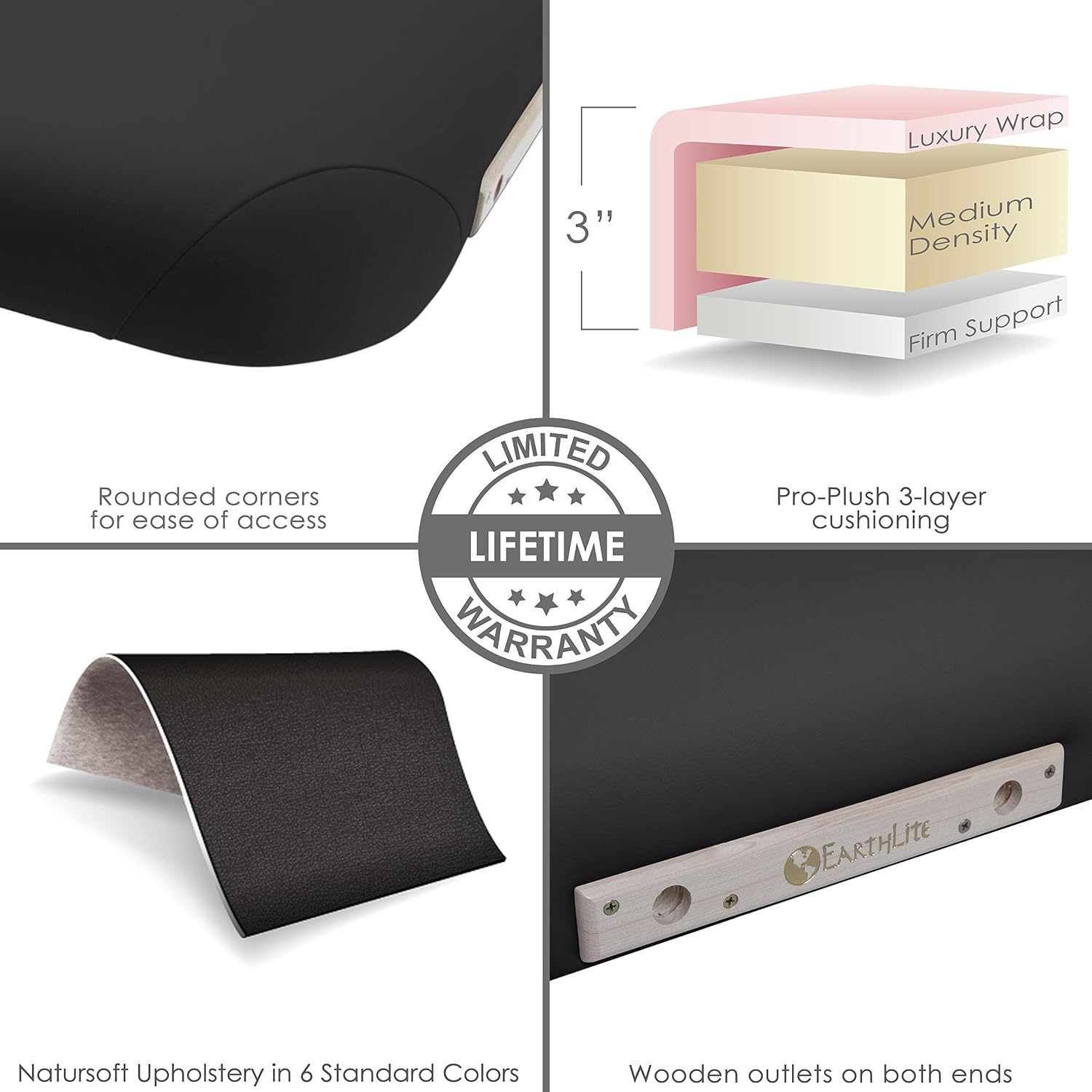
Check price on AmazonCommercial and Electric Lift Tables: Purpose-Built for Clinical Diversity
EarthLite
$1,999.00
In stock on Amazon
Check price on AmazonThe $2,000–$6,000+ tier — including the Oakworks Clinician series and the TouchAmerica HiLo Power Table — is purpose-built for clinical volume and client diversity. Published working load figures for these tables run 700–800 lbs, with hydraulic or electric lift systems rated independently for load capacity.
Per Oakworks’ published technical documentation for the Clinician series, the actuator systems are rated for the same working load as the table surface. This is a point worth confirming with any commercial electric table under consideration, because mismatched ratings between the lift mechanism and the surface have caused incidents at lesser-known brands. When evaluating commercial tables, request the lift actuator rating separately from the surface rating and confirm they align.
For chiropractic offices, physical therapy clinics, and multi-modality wellness centers expecting a diverse client population, tables in this tier eliminate the spec ambiguity entirely. The working load ceiling is high enough that practitioners can apply full technique without approaching the limit even with larger clients. For solo practitioners, the investment is significant — but for institutional buyers, fleet pricing often narrows the per-unit cost gap considerably versus mid-range stationaries.
The NCBTMB (National Certification Board for Therapeutic Massage and Bodywork), in continuing education materials related to specialty populations including bariatric clients, implicitly assumes practitioners working in institutional settings have access to equipment appropriate to that population. Clinical directors speccing tables for multi-practitioner environments are held to that standard more acutely than solo practitioners and should plan their equipment accordingly.
EarthLite
$1,999.00
In stock on Amazon
Check price on AmazonWhat This Means for Your Liability — Practically Speaking
Massage Magazine, in published coverage of equipment safety and practitioner liability, is clear on one point: if a table failure injures a client, the burden of demonstrating appropriate equipment selection falls on the practitioner. Saying “the table was rated for 600 lbs and my client weighed 350 lbs” is a defensible position only if you’re citing the working load, not the static load, and only if your technique on that day was within the parameters implied by that rating.
Three practical steps to take before you book a bariatric client:
1. Pull your table’s actual working load rating — not the marketing number. Look at the spec sheet, not the product listing. If you can’t find a published working load figure for your specific table model, contact the manufacturer directly and ask in writing. Document their response and keep it in your equipment file. This record becomes relevant if an incident ever occurs.
2. Check your professional liability policy language. Both AMTA membership and ABMP membership include professional liability coverage, but the policy language on equipment-related incidents varies by association and policy year. ABMP’s published member resources advise reviewing whether your coverage applies when equipment is used beyond manufacturer-specified operational parameters. A table rated for a 450 lb working load used with a 460 lb client during active technique may constitute a coverage exclusion, not a gray area. Review the specific language in your current policy, not the general marketing description of what the coverage includes.
3. Build a referral protocol if you can’t safely accommodate. Not every practitioner needs a bariatric-rated table today. But you do need a clear, respectful intake process and a referral relationship with a colleague who has the right setup. Telling a client “I want to make sure we have the right table for your comfort and safety” is professional, not exclusionary — and it protects them as much as it protects you.
The Upgrade Decision: If X, Then Y
The question practitioners in the 6–24 month window most often face isn’t theoretical — it’s “do I need to buy something new, and if so, what?” Here’s the decision framework, stated plainly.
If your current portable has a working load under 500 lbs and you want to see bariatric clients: You need a different table for those sessions. Your options are to add a purpose-rated portable for bariatric work at the Custom Craftworks or Oakworks mid-range ($700–$1,100) or to upgrade your primary table entirely. A second, bariatric-rated portable is often the practical choice for solo practitioners who want to maintain their existing setup for standard clients while adding bariatric capability without a full equipment replacement.
If you’re equipping a first treatment room and anticipate a diverse client base: Spec to the working load of your most demanding anticipated client, not your average client. The Custom Craftworks Omni in the $900–$1,100 range is frequently identified by practitioners as the inflection point where working load ratings become genuinely bariatric-capable without requiring a commercial table investment.
If you’re a clinic or spa director speccing multiple tables: The math changes at volume. At fleet pricing, the per-unit cost difference between a mid-range stationary and an Oakworks Clinician or TouchAmerica HiLo narrows, and the working load ceiling of the commercial tier eliminates ongoing liability exposure across your entire client population. Institutional buyers should also factor in the lift mechanism rating separately, as noted above.
If you’re seeing bariatric clients now on an under-rated table: Stop, document what you’ve been doing, and make the upgrade or referral arrangement before the next session. This is the uncomfortable version of this advice, but it’s the accurate one.
The Spec That Matters More Than You’ve Been Told
Working load versus static load is the single most misunderstood specification in massage equipment purchasing — and unlike cushion thickness or face cradle angle, it’s not a comfort preference. It’s a structural safety and liability issue with a direct line to your insurance, your client’s wellbeing, and your professional standing.
The information is available. Oakworks, Custom Craftworks, Earthlite, and TouchAmerica all publish working load figures in their technical documentation — you just have to look for them, and you have to know that the marketing headline number is almost never the one that matters. Pull the spec sheets, check your policy language, and make sure the table under your next bariatric client is rated for the work you’re actually doing — not just the weight resting there at the start of the session.
That’s the difference between a table spec and a liability exposure. Now you know which one to read.