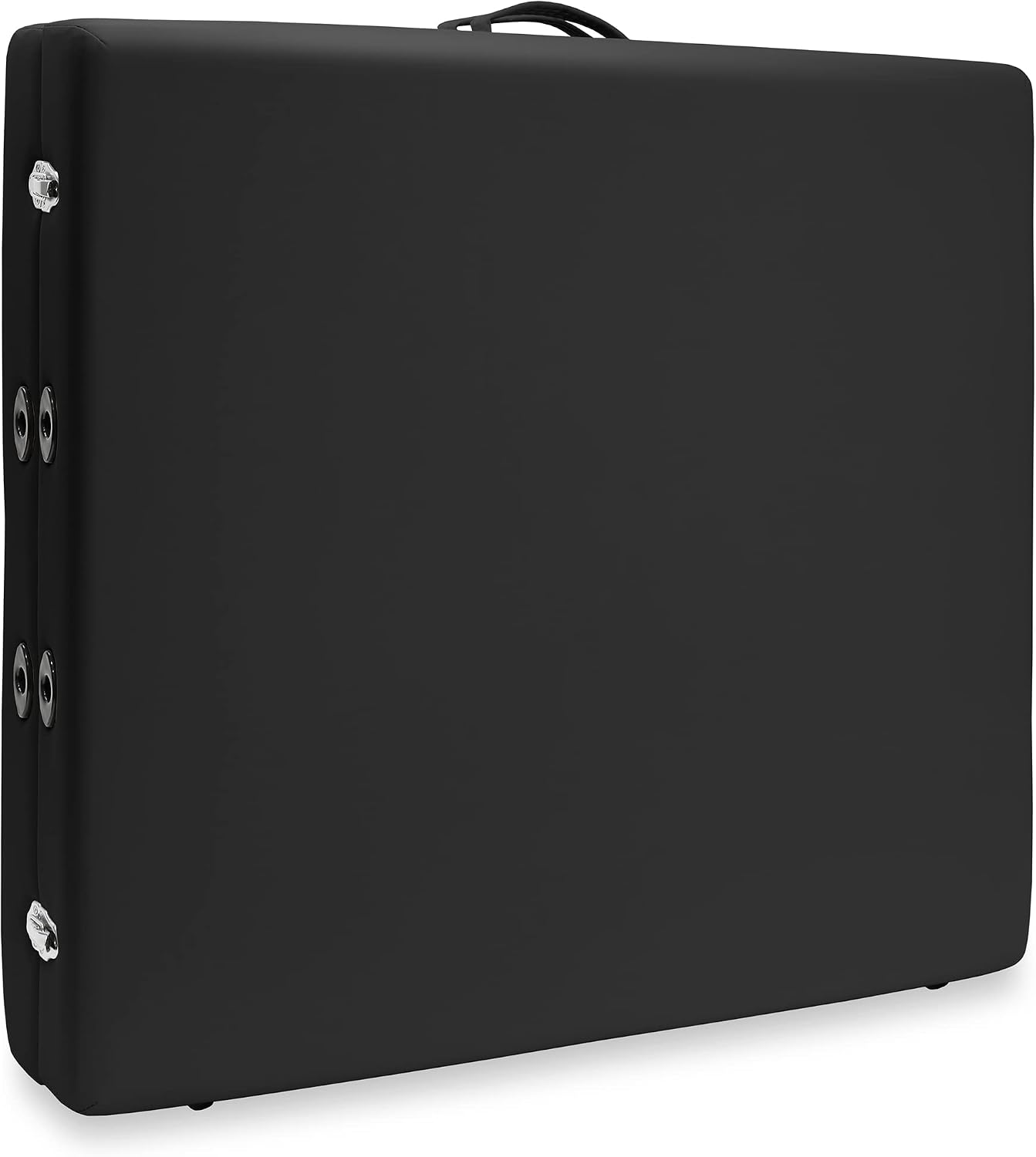
Imagine you’ve just added an assisted stretching certification to your credentials — maybe Thai massage, maybe a stretch-therapy protocol you picked up at a CE weekend. You’re excited. You book your first session. Then your client lies down on your 28-inch-high portable table, and you immediately realize the problem: you’re crouching at a 45-degree angle, one knee threatening a cabinet, trying to lever a leg-stretch with your arms instead of your body weight. By session three, your lower back is complaining. By session six, you’re wondering if you made a mistake.
You didn’t make a mistake about the modality. You made a mistake about the equipment. Thai massage and most assisted-stretching protocols are floor-based or near-floor disciplines — meaning the practitioner’s leverage, posture, and safety depend entirely on the client being much closer to the ground than a standard massage table allows. This article explains why height is the decisive spec, what “low table” actually means in published dimensions, how to compare the options built for this work, and how to decide whether you need a dedicated low table, a height-adjustable electric table, or a purpose-built floor mat system.
Why Standard Table Height Is the Wrong Starting Point
A conventional portable massage table sits between 24 and 34 inches high when adjusted across its full range. Most practitioners set it somewhere in the 27–30 inch zone — high enough to keep their own spine neutral during Swedish or deep-tissue work while standing alongside the table. That geometry is correct for standing-alongside work. It is the wrong geometry entirely for Thai massage or assisted stretching.
Thai massage — a modality rooted in traditional Thai medicine, described in detail by the NCBTMB’s continuing education standards as a sequence of assisted yoga-like postures, rhythmic compression, and passive joint mobilization — is traditionally performed on a floor mat called a “Thai mat” or “shiatsu mat,” with the client at ground level and the practitioner kneeling, squatting, or sitting. The practitioner’s body weight, not arm strength, generates pressure and creates leverage for stretches. When the ABMP’s practitioner-injury guidance identifies wrong table height as a leading contributor to career-ending musculoskeletal injuries, this is the exact scenario they’re describing: a technique designed for one body geometry being forced into a completely different one.
The math is simple but important. A hip-hinge passive stretch — say, lifting a client’s leg toward the ceiling while kneeling — requires the practitioner’s center of gravity to be below or level with the working joint. At 28 inches of table height, a kneeling practitioner’s shoulders are at roughly 24–26 inches. The working plane is already above the practitioner’s optimal leverage zone. Practitioners end up compensating with their lumbar spine instead of their hips and legs, which is exactly the substitution pattern that causes injury over time.
By the numbers:
- Standard portable table range: 24–34 inches
- Recommended working height for Thai/assisted stretch: 8–18 inches (floor mat) or 16–24 inches (low table)
- Practitioner kneeling shoulder height (average adult): approximately 22–26 inches
- ABMP survey data cited in their ergonomic guidance: lower-back strain is the #1 career-disrupting injury among LMTs
The Three Equipment Paths — and Their Real Tradeoffs
Path 1: The Traditional Floor Mat System
The most authentic and lowest-cost option is a dedicated Thai massage mat — a firm, high-density foam pad, typically 2–3 inches thick, that covers a defined floor area (usually 3×6 feet or larger). Brands like Custom Craftworks and several specialty suppliers offer these in commercial-grade construction.
What you gain: Full range of kneeling, squatting, and sitting practitioner positions. Maximum leverage for leg lifts, spinal rotations, and shoulder mobilizations. Zero adjustment mechanics to maintain. Lowest price point in the category, often $150–$400 for a quality commercial mat.
What you give up: Accessibility for clients who cannot get down to or up from the floor — a significant clinical consideration for older adults, clients with knee replacements, or anyone with mobility limitations. You also lose the option to pivot to Swedish or deep-tissue work in the same session without moving equipment. Upholstery durability is a real concern on floor mats; look for PU (polyurethane) covers rated to at least 100,000 Wyzenbeek cycles if you’re doing daily commercial volume — the floor position means more abrasion from clothing and from the practitioner’s knees and feet than a conventional table ever sees.
Massage Magazine’s coverage of Thai massage setup notes that most working Thai practitioners in clinical settings use mats between 2.5 and 4 inches of density-graded foam — firm enough that the client isn’t sinking, which would eliminate the practitioner’s ability to feel and control movement through the body.
Path 2: The Dedicated Low Table
A low massage table is exactly what it sounds like: a table built with a height range that starts significantly lower than a standard portable. Purpose-built low tables typically adjust from roughly 8 to 18 inches — sitting on the floor mat spectrum but elevated enough that some practitioners prefer the surface height for client comfort and for specific stretch positions that work better with a few inches of clearance.
The key specs to compare here are not padding thickness (though 2–3 inches of high-density foam is the professional-grade standard) — they’re height range floor, working load capacity, and surface dimensions.
Working load (sometimes called “dynamic load”) is the force the table must handle during active use — a practitioner kneeling on the table surface while manipulating a limb, or applying body-weight compression through their knee or foot. This is categorically different from static load (the weight of a client lying still), and it’s the most commonly misread spec in the category. A table rated for 450 pounds static may be rated for considerably less under dynamic conditions. For Thai and assisted-stretch work, look for tables with an explicitly stated working load of at least 300 pounds — and verify that the manufacturer publishes that number separately from the static rating.
Surface width matters more at low height than it does on a standard table. When a client is close to the floor and the practitioner is working from multiple directions — kneeling at the side, sitting at the head, or straddling the table — a 28-inch-wide surface becomes constraining. Most practitioners doing high-volume assisted-stretch work prefer 30–32 inch width in a low-table format.
Path 3: The Electric Lift Table at Its Lowest Setting
This is the option that sounds appealing on paper and has real limits in practice. Several electric lift stationary tables — the Oakworks Clinician series and similar clinical-grade units priced in the $2,000–$6,000+ range — can lower to 18–20 inches at their floor minimum. That’s close to the low-table range, and it offers the obvious advantage of raising the table back up for standard work or for helping the client dismount.
The tradeoffs are real, though. Electric tables are designed and rated for standing-alongside work with a client lying still. Their dynamic load ratings — the ones that matter when you’re kneeling on the surface or applying body-weight leverage — are not always published for the floor-level position, and the lift mechanism adds a mechanical failure point that a static low table simply doesn’t have. For a resort spa or a chiropractic office doing assisted stretching as one component of a broader treatment menu, the electric table’s flexibility may justify the cost and complexity. For a practitioner whose primary modality is Thai massage or stretch therapy, it’s usually over-engineered for the wrong problem.
The AMTA’s scope-of-practice documentation classifies Thai massage as a distinct modality with its own environmental and equipment requirements — a useful framing when you’re justifying a dedicated equipment purchase to a clinic director or wellness center owner making a fleet procurement decision.
Face Cradle and Accessory Compatibility — Don’t Overlook This
One often-missed consideration: face cradle compatibility at low-table height. Standard face cradles are designed to attach to table ends at a height that makes sense for a 27–30 inch table. At 10–16 inches of table height, a standard face cradle positions the client’s face approximately 8–12 inches off the floor — which can create neck extension issues in prone position, and which may require a cradle with a significantly different arm length or angle adjustment than what came with your portable.
Most Thai massage practitioners working on floor mats use a dedicated floor-level face cradle or a purpose-built bolster system for prone positioning. If you’re purchasing a low table, verify before you buy whether the manufacturer includes a compatible face cradle or sells one separately. This is, per consistent practitioner feedback aggregated across professional forums, the single most common source of post-purchase frustration in this category — the table works perfectly, the face cradle doesn’t fit or doesn’t angle correctly at floor height.
The Decision Frame: If X, Then Y
Here’s where the tradeoffs resolve into a clear buying decision:
If Thai massage or floor-based stretch is your primary modality and 80%+ of your sessions: Buy a dedicated floor mat system. The leverage is better, the price is lower, the failure points are fewer. Budget $200–$400 for a commercial-grade mat with a durable PU cover.
If you’re adding Thai or assisted stretching as a secondary modality (30–50% of sessions) alongside Swedish or deep-tissue work: A dedicated low table in the 8–18 inch adjustable range makes sense. You get a real working surface without the compromise of forcing a standard table into a role it wasn’t built for. Budget $400–$900 for a quality unit from an established brand.
If you’re a clinic, spa, or multi-table facility where assisted stretching is one service line among many: An electric lift table that reaches 18–20 inches at its floor minimum may justify its $2,000–$6,000+ price point — but only if you verify the dynamic load rating at minimum height and confirm the face cradle system is compatible across the full height range.
In all cases: Prioritize working load over padding spec, verify the face cradle story before you finalize the purchase, and remember that the right table height isn’t about client comfort — it’s about keeping your own body in the correct mechanical position to do this work for a full career. The ABMP’s ergonomic guidance is unambiguous on this point: practitioners who match their equipment to their modality’s actual geometry report significantly fewer musculoskeletal complaints over time.
The table your Thai certification instructor used wasn’t an accident. It was a clinical decision. Now you know why.